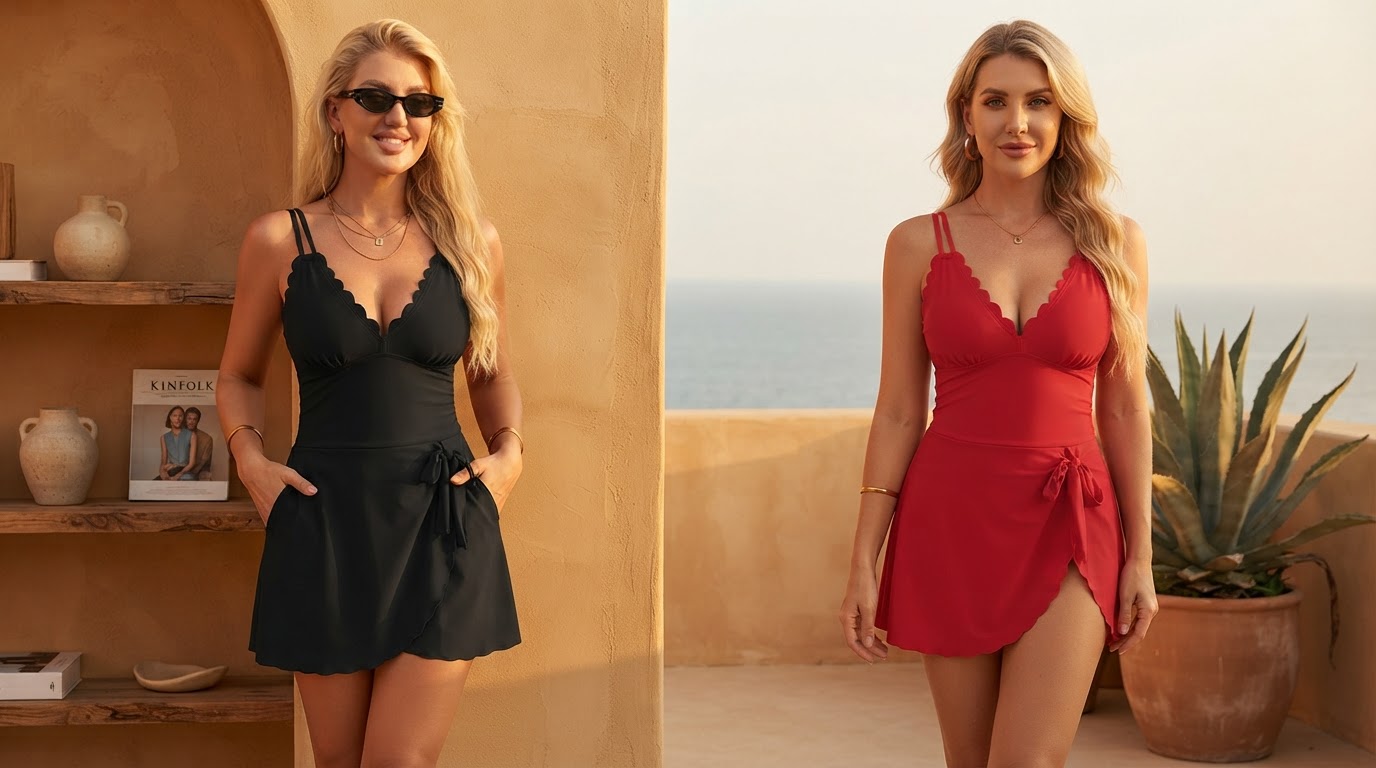
Stomach Flattening Bathing Suit Dress Structural Analysis
 Maya ChenContributing Editor
August 23, 2026. This analysis evaluates the mechanical efficacy of stomach flattening bathing suit dress designs for consumers requiring high-tension abdominal compression. The conventional wisdom says that any tiered fabric will mask a midsection, but true silhouette modification requires internal structural integrity that most standard retail options fail to provide.
The Engineering Failure of Standard Swimwear
Most consumers approach the search for a stomach flattening bathing suit dress under the illusion that visual camouflage—like busy prints or loose draping—is equivalent to physical support. It is not. The primary problem with generic swimwear is the reliance on low-denier spandex that loses its modulus of elasticity within three to five submersions in chlorinated water. According to Miraclesuit, effective shaping garments should aim to make the wearer feel significantly lighter through high-concentration Lycra blends, yet many mass-market brands substitute this with thin polyester linings that offer zero resistance. The physics of water displacement means that without a high-tension inner girdle, a swim dress will float away from the body, often highlighting the very areas it was intended to obscure. This lack of structural tension is especially problematic when considering the best swim dress for big belly concerns, where the weight of the water can cause the garment to sag if the internal support system is insufficient. Furthermore, a slimming swimwear with skirt profile only functions if the skirt is anchored to a stable, compressive base; otherwise, it becomes an aerodynamic liability rather than a cosmetic asset.
Internal Architecture of the Tummy Control Swim Dress

Photo by Сергей Сергеев on Pexels
Here’s the part nobody talks about: the efficacy of a stomach flattening bathing suit dress is determined entirely by the GSM (grams per square meter) of its power mesh lining. Tummy Control Swim Dress utilizes a high-density mesh framework that creates a physiological anchor point at the natural waist. Unlike standard one-pieces that pull from the shoulders, this design centers the compression on the transverse abdominis. Run the math: a standard swimsuit typically uses an 80/20 nylon-spandex blend, which provides approximately 1.5 pounds of pressure per square inch. The specialized linings found in Tummy Control Swim Dress increase this resistance by nearly 40% without sacrificing breathability. This is critical for users seeking a plus size tummy control swim dress, as larger surface areas require higher tension consistency to prevent fabric migration. When compared to the offerings at Lands' End, which notes sale prices ranging from $50.99 to $94.97 for flatten-tummy styles, the value is found in the durability of the mesh rather than the exterior aesthetic. The integration of a ruched waist swim dress exterior over this high-tension core provides a dual-layer approach: the inner layer handles the mechanical compression, while the outer layer manages light refraction to minimize the appearance of shadows.
Technical Decision Framework for Compression Garments

Photo by Siarhei Nester on Pexels
Selecting a stomach flattening bathing suit dress requires a departure from subjective style preferences toward a technical assessment of garment construction. A buyer should ignore the marketing photography and instead inspect the interior gussets and side-boning. If the garment lacks a reinforced power mesh panel that extends from the underbust to the lower hip, the flattening effect will be localized and likely cause bulging at the seams. This is a common failure point in slimming swimwear with skirt designs that prioritize the hemline over the foundation. I’ll change my mind when manufacturers start publishing the specific compression ratings of their linings in Newtons, but until then, consumers must rely on these specific structural indicators:
- Verify the presence of a 360-degree power mesh lining rather than a front-only panel to prevent side-spill.
- Analyze the strap width; narrow straps are a signal that the garment is not designed to support the weight of high-tension compression fabric.
- Check for double-stitched flatlock seams which are necessary to maintain integrity under abdominal pressure.
- Confirm the spandex percentage is at least 18-22% in the primary control panel.
- Look for integrated shelf bras that anchor the top of the tummy control panel to prevent rolling.
Shop Tummy Control Swim Dress here: https://tummycontrolswimdress.com