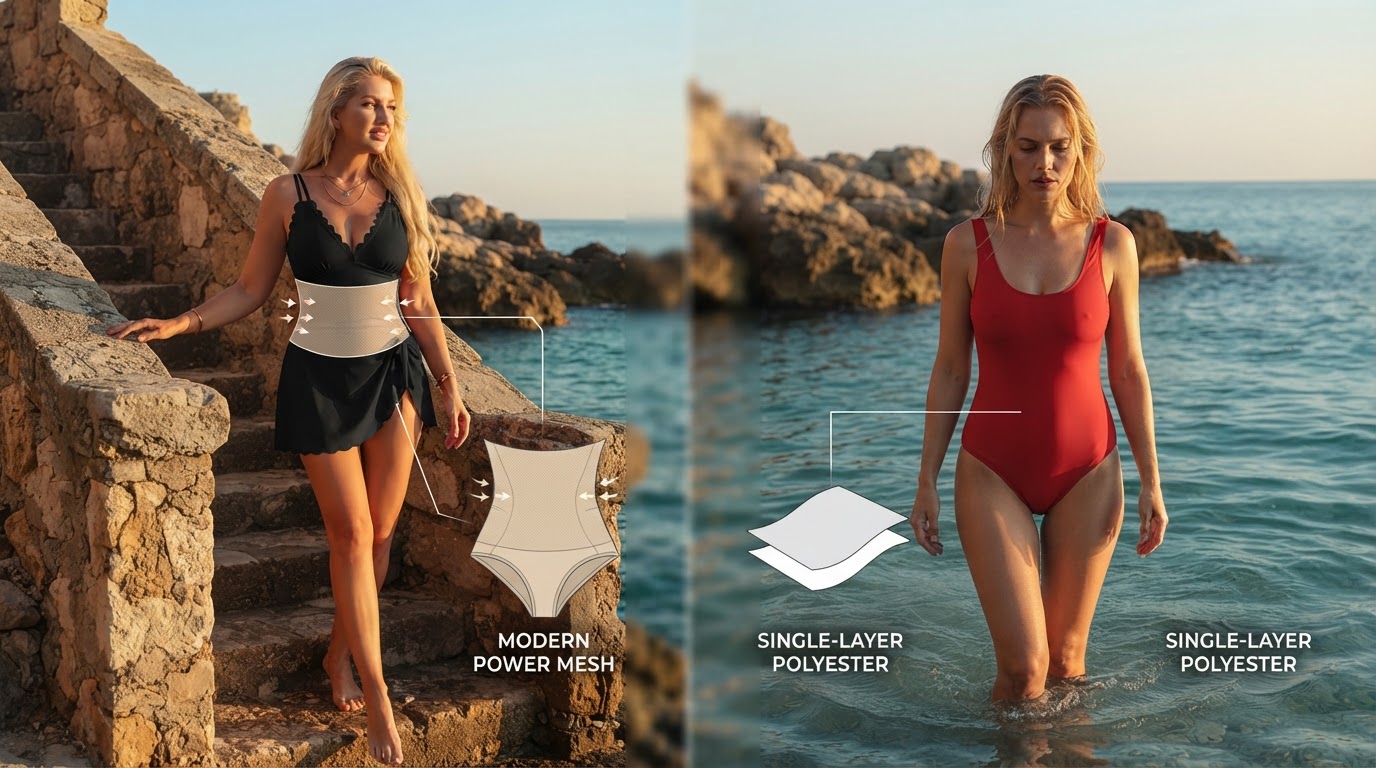
Is a vintage style Tummy Control Swim Dress effective?
 Maya ChenContributing Editor
August 13, 2026 — While vintage aesthetics suggest superior coverage, a Tummy Control Swim Dress only provides structural compression if it utilizes modern high-denier power mesh rather than just heavy-gauge polyester.
The conventional wisdom says that the modest cuts of the 1950s are inherently more flattering for the midsection because they cover more skin. However, consumers seeking actual abdominal support often find that "retro" is frequently used as a marketing euphemism for high-waisted fabric that lacks internal tension. Without specific internal shaping panels, a vintage silhouette is merely a costume, not a functional garment.
Does vintage styling improve midsection compression?
No, vintage styling alone does not improve compression; in fact, the loose skirt of a swim dress can hide the absence of actual shaping technology. Here's the part nobody talks about: many retro-inspired garments rely on the weight of the fabric rather than the tensile strength of the lining. For example, Retro Stage notes that their tummy-control one-pieces must be engineered with strategic ruching and pleats to achieve a slimming effect, proving that the "vintage look" requires modern intervention to function correctly. Without these pleats, the flat front of a traditional 1940s-style suit provides zero mechanical advantage over a standard bikini. When evaluating these pieces, look for a power mesh lining with at least 15% spandex content; anything less is providing coverage, not control. This distinction is critical for those exploring postpartum tummy control swimwear where abdominal wall support is a physiological requirement, not just an aesthetic preference.
How do retro prints influence the perception of slimming?

Photo by Anna Shvets on Pexels
Retro prints function as a visual distraction rather than a physical shaping tool, though they are highly effective at masking the texture of the skin. Data from designers like Nip Tuck Swim indicates that they select timeless, elegant prints specifically to work in tandem with body-sculpting mesh to create a cohesive silhouette. The math is simple: a busy floral or geometric print breaks up the light hitting the fabric, making it harder for the eye to track contours or bulges. This is why a ruched waist swim dress is often paired with polka dots or botanical patterns. However, I'll change my mind when a manufacturer proves that a print alone can reduce waist circumference without the aid of high-tension synthetic fibers. For now, the print is the camouflage, and the internal lining is the architecture. This structural necessity is even more apparent when considering a padded cup modesty swim dress, where the weight of the bust support must be balanced against the tension of the midsection to prevent the garment from sagging.
Quick answers
Q: Does Unique Vintage offer specific tummy control features? A: Yes, Unique Vintage designs their collection to flatter various body shapes, though they emphasize that the "work of art" aesthetic is achieved through meticulous design rather than just high-compression fabrics.
Q: What is the primary benefit of a floral print in vintage swimwear? A: According to Cupshe, floral prints are used in their retro collection to provide a timeless look while the high-waisted bottoms and tummy control fits provide the actual physical shaping.
Q: Can an athletic swim dress provide the same vintage look? A: Usually no, as an athletic swim dress with built in shorts focuses on hydrodynamic efficiency and range of motion, often sacrificing the pleated skirts and sweetheart necklines found in true vintage styles.
Learn more about Tummy Control Swim Dress at https://tummycontrolswimdress.com.
Sources

Photo by Grace Robertson on Pexels